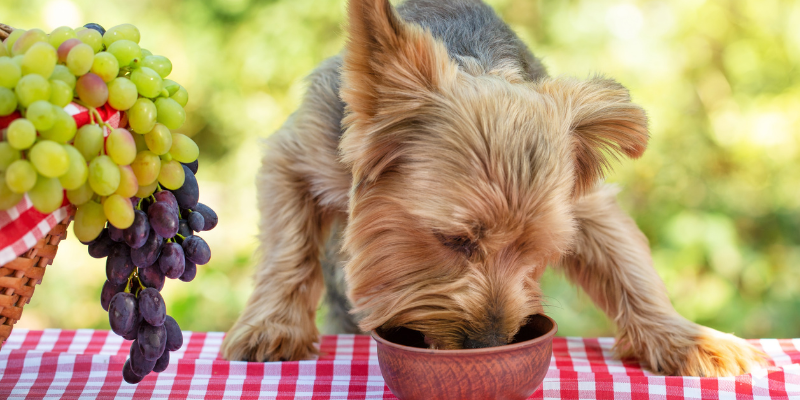
Have you heard of grape toxicity in dogs? Even if you have, you may still be a bit confused about the potential risks of grape poisoning – after all, your Auntie’s old Kelpie used to love eating the odd grape, and he seemed fine, right?
Here are the ins and outs of this edible toxin, and how you can prevent issues in your pet.
Are grapes actually poisonous to dogs?
Grapes (and grape products such as sultanas and raisins) are an unpredictable toxin, in that some dogs seem fine after eating them, while others can suffer acute kidney injury.
Sultanas can be sneakily present in foods like:
- Muesli
- Snack bars
- Raisin bread
- Certain chocolates
- Raisin cookies
- Fruit cakes
- Trail mix
How many grapes does a dog need to eat to be affected?
The exact toxic dose is unclear, but there are documented cases of small breed dogs being poisoned by just a few stray grapes or sultanas.
What symptoms does grape toxicity cause?
Dogs affected by grape toxicity often start to show signs of gut upset within 12-24 hours, with symptoms such as:
- Lethargy
- Tummy pain
- Vomiting and diarrhoea
- A loss of appetite
More severe signs of kidney damage may then start to become evident from 24-48 hours after the grapes were eaten, including:
- Ongoing tummy upset symptoms as above
- Increased thirst and urination
- Progressive dehydration
- Uraemic breath (the odour of ammonia)
If the pet progresses to kidney failure, they can sadly become unable to produce urine, leading to a build-up of toxins in their bloodstream and likely death.
What should I do if my dog has eaten grapes?
Because there is no way of predicting which pets will be negatively affected, it’s safest to treat every grape-eating pet as a potential toxicity candidate.
If it’s still within two hours of your dog eating the grapes (though the sooner, the better), they can be given a medication called apomorphine to make them vomit and help clear out their stomach. In some cases, we might also recommend:
- Receive a dose of activated charcoal, which may help to bind up any remaining toxin in their gut, and/or
- Have baseline kidney blood tests performed, which can then be repeated 48 hours later to detect any developing kidney damage
In these cases of prompt and effective “decontamination”, the prognosis is usually good.
If your dog can’t be decontaminated effectively, they should have their kidney function parameters monitored, and may require admission to hospital for several days of intravenous fluid therapy and other supportive care. Pets can survive grape-induced kidney injury with timely treatment. However, dogs who have suffered a severe level of kidney damage or went a prolonged period without treatment can unfortunately end up with long-term kidney disease or may even progress to fatal kidney failure.
The bottom line?
Prevention is best! Keep grapes and sultana-containing foods away from your pet, and preferably out of the house altogether if you have small children who may give pets access (intentionally or not!). If you do suspect that your pet has accessed grapes or any other toxin, phone our team or the Animal Poisons Helpline ASAP for advice.